
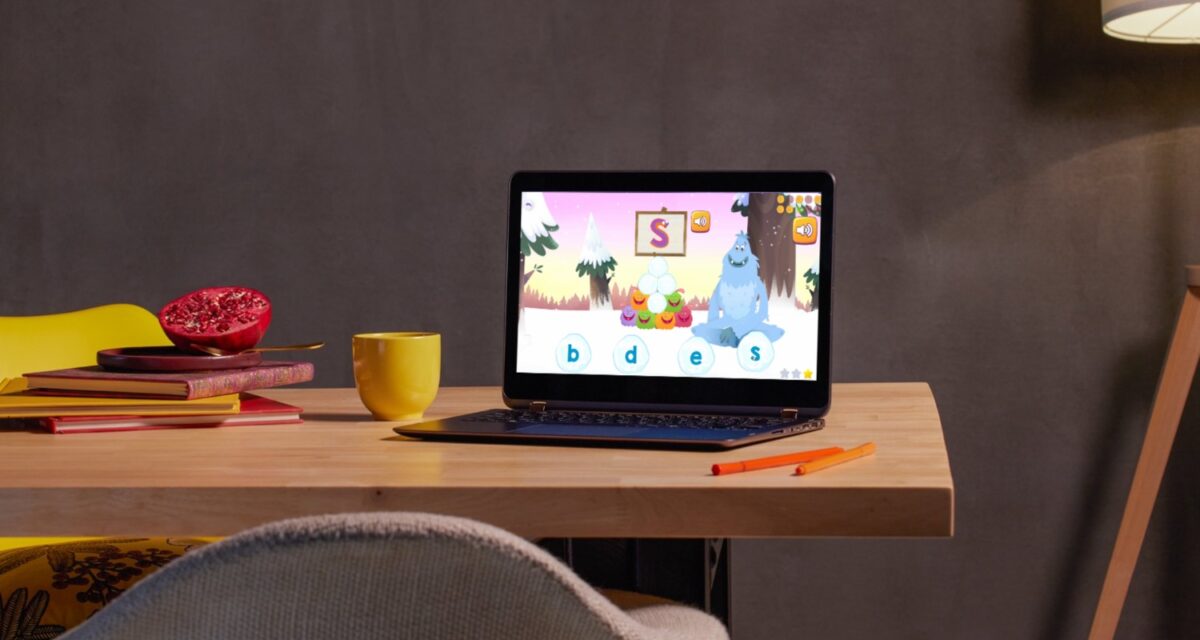
Fast Phonics is a phonics app that often flies under the radar — mostly because it’s bundled inside a Reading Eggs subscription.
And I’ll be honest right from the start: while Reading Eggs isn’t my personal favorite overall, I’ve shared my perspective on it openly before. However, Fast Phonics is a different story.
In fact, Fast Phonics is the main reason I would personally consider a Reading Eggs subscription. That may sound a little strange, but once you look closely at how Fast Phonics works, it starts to make sense.
So, let’s break it down!
*Affiliate Disclosure: Some links in this article may be affiliate links, meaning that I could get a small commission at no additional cost to you should you decide to buy from them.
What is Fast Phonics?
Fast Phonics is a phonics-based reading app designed to help children practice and reinforce foundational reading skills.
It starts with very basic skills (such as letter sounds and early blending) and gradually progresses to more complex phonics concepts, including digraphs, vowel teams or more advanced decoding patterns.
Overall, the skill progression goes roughly up to a second-grade reading level.
According to the creators, Fast Phonics is intended for children ages 5–10, and for older elementary students who need extra phonics or phonemic awareness practice.
The app can be used on a computer or tablet and includes short video lessons, interactive activities and games, and phonetically decodable books.
Most importantly, everything is organized in a clear, structured, and systematic way.
How is Fast Phonics Organized?
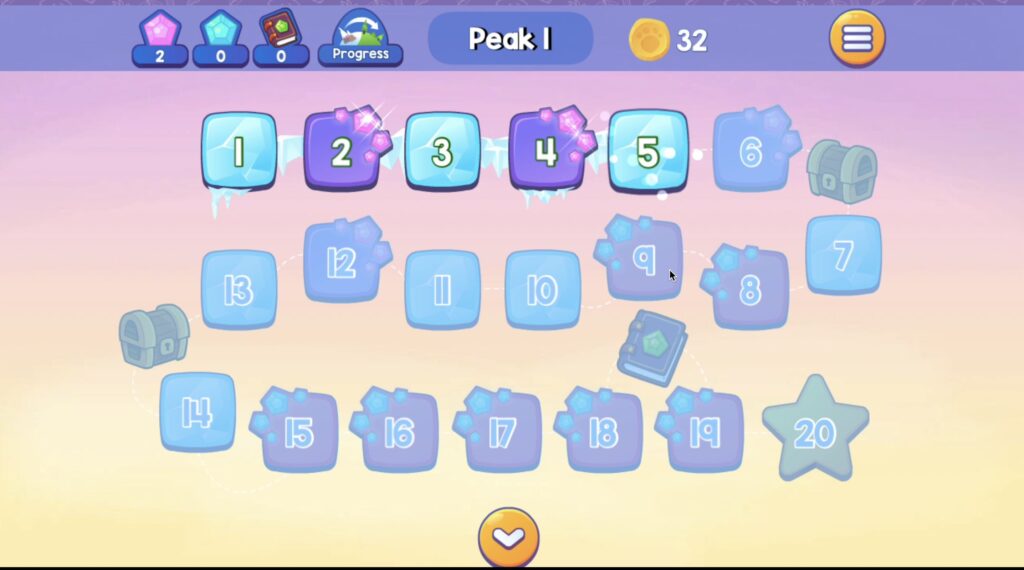
Fast Phonics is organized into 20 levels, called peaks.
Each peak contains approximately 20 short activities, including a mix of instruction, practice, and reading.
Children progress through the peaks following a carefully planned, systematic synthetic phonics sequence, where new skills are introduced step by step in a logical, way that builds securely on what has already been taught.
A Look Inside the App
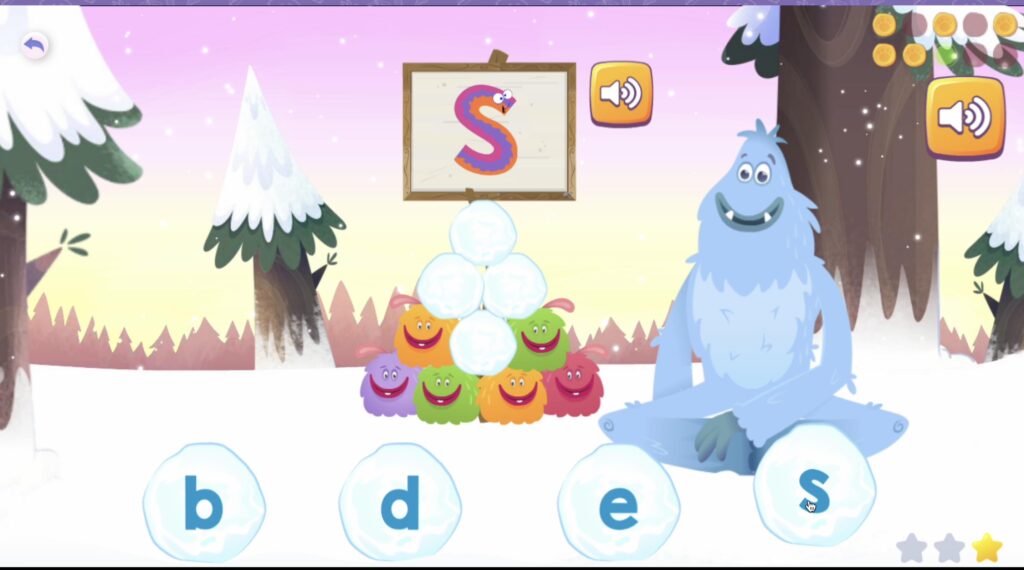
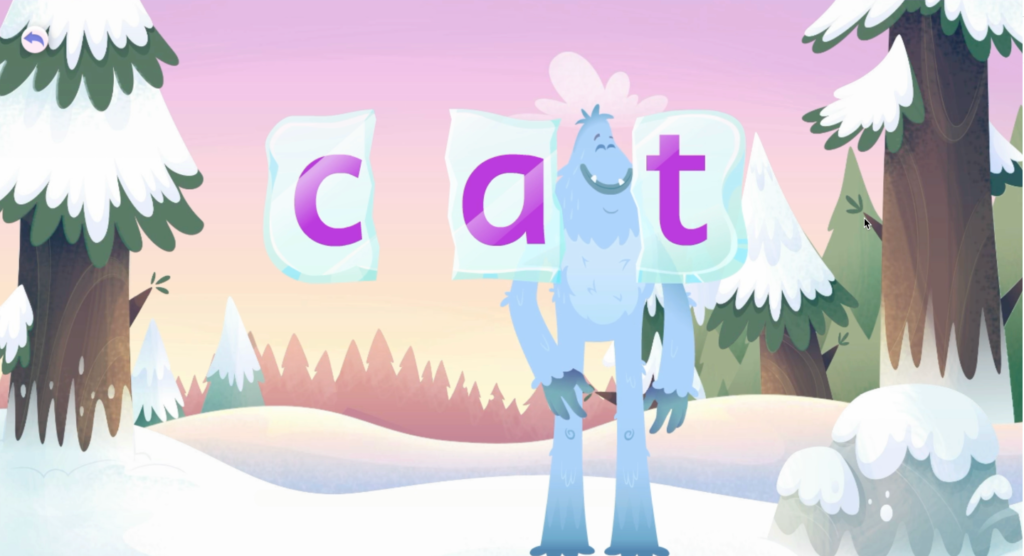
The app is fun, engaging, and really easy to use for kids. There’s central character, the Yeti, that guides children through the different steps within the “peaks.”
The activities and short and to-the-point (great to keep children’s attention!), and it isn’t overstimulating.
Fast Phonics also has a nice rewards system. As children progress through the app, they also unlock new features and earn Yeti Coins, which can be spent in the in-app Yeti Shop. This reward system adds a layer of motivation without distracting from the learning itself.
However, to better understand how this all translates into real, day‑to‑day practice, it helps to actually see the app in action!
In the video below, I walk through Peak 1 step by step, showing activities 1 through 9 so you can see exactly how lessons and activities unfold: from explicit instruction, to guided practice, to independent application.
The video is already pre-set to start at minute 2:30, where the walk-through begins. The walk-through ends in minute xx.
Is Fast Phonics a Full Learn-to-Read Program?
In my opinion, no.
Instead, it works best as:
- A supplement to a homeschool reading curriculum
- Extra phonics practice alongside school instruction
- A structured reinforcement tool for kids who need more repetition
I don’t even think it was ever designed to be a full learn-to-read curriculum, to be honest.
Reading Eggs feels more like the “main curriculum” in their ecosystem, while Fast Phonics functions more like the “extra:” the extra phonics practice, the explicit phonics practice component.
What I Like About Fast Phonics: Fast Phonics Pros
Pro #1: Clear, Phonics-First Instruction
Fast Phonics keeps the focus where it should be:
- Letter–sound relationships
- Blending
- Decoding
Lessons are short and focused, which helps children stay engaged without feeling overwhelmed.
Pro #2: The SATPIN Phonics Sequence
Fast Phonics follows a SATPIN sequence, introducing some of the most frequently used letter sounds early on.
To be more specific:
Sound /s/ – Letter “s”
Sound /a/ – Letter “a”
Sound /t/ – Letter “t”
Sound /p/ – Letter “p”
Sound /i/ – Letter “i”
Sound /n/ – Letter “n”
Why? The idea behind this order of introduction is that it allows children to start reading many words very quickly (remember, these are the most frequent sounds!) which can be great for confidence, motivation, and early success.
Is SATPIN the only valid phonics sequence? No, it isn’t. But it does align with many phonics programs, so it may fit well with what your child is already learning. It is my understanding that this sequence is particularly popular in the UK and Australia.
Pro #3: Embedded Picture Mnemonics
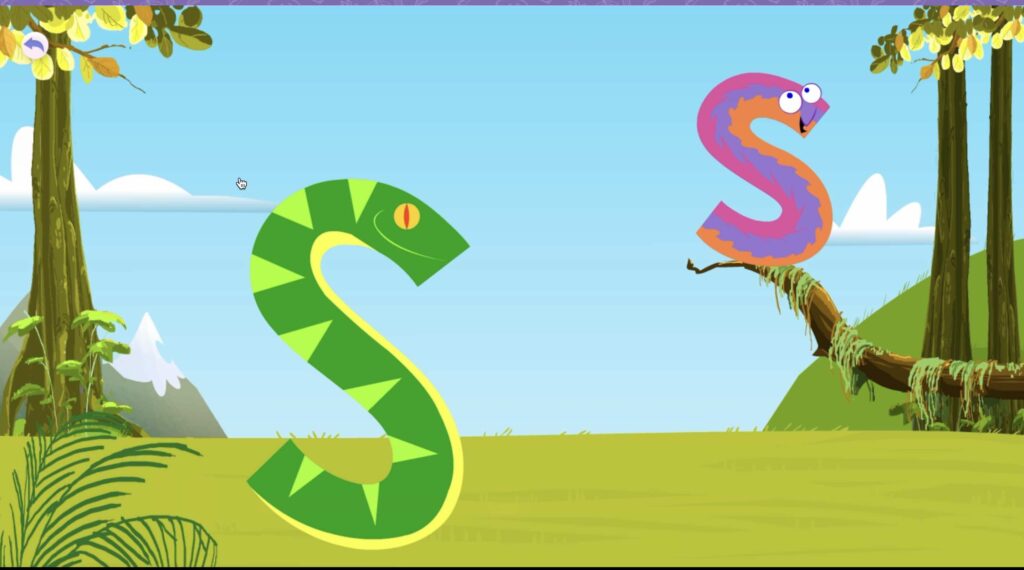
One of my favorite features is the use of embedded picture mnemonics for teaching letter sounds.
Instead of showing a picture next to a letter, the image is embedded directly into the letter shape itself. This helps children connect the letter shape its letter sound.
This strategy is research-backed and has been shown to help children learn letter sounds faster, with fewer repetitions and… I should also add less frustration.
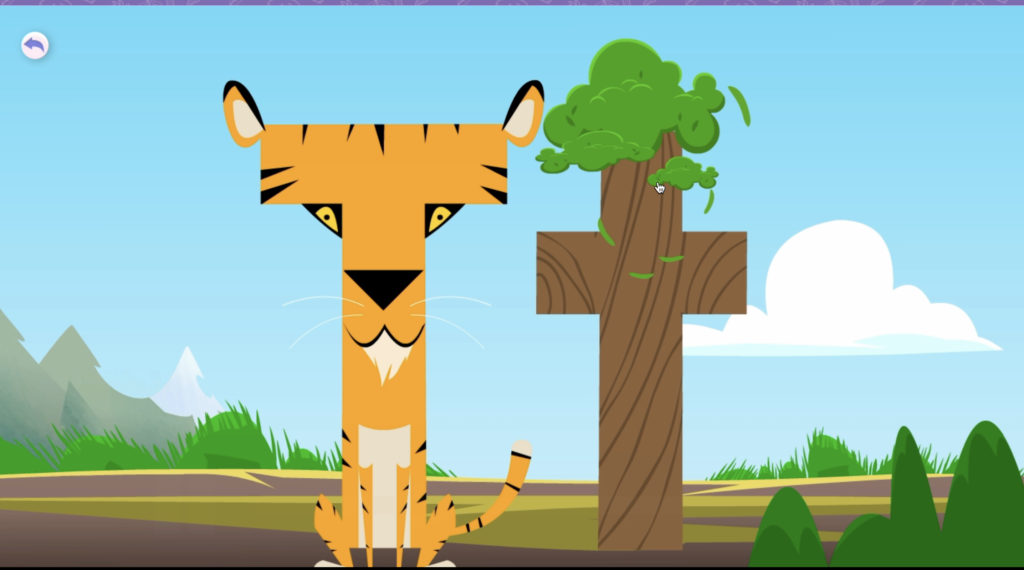
I love embedded mnemonics so much that I even created my own embedded picture mnemonic alphabet cards—The PhonixPals Alphabet Cards.
– More info about the PhonixPals Cards here!
– More info about Embedded Picture Mnemonics here!
This is very different from traditional alphabet cards where the picture is simply placed above or below the letter — which is not considered best practice.
Pro #4: Decodable Books that Match the Phonics Sequence
Fast Phonics includes a library of phonetically decodable books that align with the skills children have just learned.
This is an important distinction.
Unlike general reading libraries that mix levels and skills, these books match the phonics patterns being taught, allow children to practice decoding successfully, and reinforce new skills immediately.
Pro #5: Engaging, but Not Overstimulating
The app is engaging without being chaotic.
The design is clean, the characters are playful, and the rewards are motivating. However, the app never feels overly busy or distracting — something that really matters for children who struggle with attention or reading.
The Downsides of Fast Phonics: Fast Phonics Cons
Con #1: You Can’t Get It on Its Own
As mentioned earlier, Fast Phonics is only available through a Reading Eggs subscription.
While this could still be frustrating for those who only want access to Fast Phonics, the subscriptions is still pretty affordable overall.
At the time of writing:
- Monthly plan: $9.99/month
- Annual plan: about $5.83/month
There is also a 30-day free trial, which makes it easier to test before committing.
Con #2: It’s Not a Full Reading Curriculum
This is worth repeating.
I do not consider Fast Phonics a full learn-to-read curriculum, but rather a supporting, complementary tool.
Its main role is to provide practice and reinforcement of phonics skills, either alongside Reading Eggs or alongside whichever core reading curriculum you may already be using.
In my opinion, Fast Phonics was not designed to function as a stand-alone curriculum. Instead, it feels like one piece of the broader Reading Eggs ecosystem — specifically the phonics-focused component that supports and strengthens overall reading instruction.
Con #3: Some Children May Need More Support
While Fast Phonics works well for many learners, it may not be sufficient for children with more significant reading difficulties — particularly students diagnosed with dyslexia.
These children often benefit from more intensive, remedial, and highly explicit instruction than an app alone can provide, ideally delivered through a structured intervention or one-to-one support.
Pricing, Bundles, and Extra Options
Here’s a clear breakdown of the different Reading Eggs plans, what they include, and current pricing (at the time of writing). All plans allow four different profiles per account.
Reading Eggs Subscription Price
Monthly Subscription:
$9.99/month
Yearly Subscription:
$69.99/year (about $5.83/month)
Includes access to:
- Reading Eggs (core reading program)
- Fast Phonics (phonics practice and reinforcement)
- Reading Eggs Junior (designed for younger children)
- Reading Eggspress (for older kids — reading comprehension, spelling, vocabulary, and grammar)
Reading Eggs + Mathseeds Bundle Price
Monthly Subscription:
$13.99/month
Yearly Subscription:
$99.99/year (about $8.33/month)
Includes everything in Reading Eggs, plus:
- Mathseeds (early math instruction and practice).
This option can be a good fit if you’re looking to cover both early reading and early math in one subscription.
Reading Eggs Homeschool Max Plan Price
Monthly Subscription:
$41.90/month
Yearly Subscription:
$299/year (works out as $24.99/month)
- All of the above, plus
- Reporting and progress-tracking tools
- Assignment features
- Performance monitoring aligned with academic standards
This plan is designed specifically for homeschool families who want more structure and visibility into their child’s progress. I found the ability to monitor performance against academic performance very interesting.
Final Verdict: Is Fast Phonics Worth It?
Fast Phonics is a well-structured, phonics app that does one thing particularly well: systematic phonics practice.
It is not a complete learn-to-read solution, but it can be a valuable addition to:
- Homeschool reading instruction
- Reinforcement of school’s reading instruction
- Extra support for struggling readers
If you’re considering a Reading Eggs subscription, Fast Phonics is the strongest part of that package.

Hey there! I’m Laura – an author, YouTuber, blogger, and the creator of the “Learning Reading Hub” platform. I created this space to dive into the world of reading instruction and to shout from the rooftops about how vital it is to use the right methods for teaching reading. I’ve got a TEYL certification (Teaching English to Young Learners), plus a Journalism degree from the University of Navarra in Spain, along with a Master’s Degree in Communication.
I’ve always loved digging into research, jotting down my thoughts, connecting with people, and sharing what makes me tick. With a background in marketing, digital projects, and the education scene (especially language learning), I’m all about wearing different hats.
When my first kid needed to learn how to read, it opened my eyes to the challenges and complexities involved. This journey took me through a rollercoaster of self-teaching, eye-opening discoveries, and yeah, some letdowns too. There’s so much conflicting info out there, along with methods that just don’t cut it. And let’s face it, these issues are way too common.
Now, I’m all about channeling that passion (without sounding like a know-it-all!) and sharing my journey. My mission? Making it easier for those who are on the same path I once was.
My heart’s with my family and the amazing Learning Reading Hub project. I live with my husband and two little ones, raising them in a bi-lingual environment (English and Spanish).
