

Most parents assume that learning to read begins when we start teaching letters.
And while being aware that letters exist, that they represent sounds, and having some familiarity with them is definitely very helpful once formal reading instruction begins… reading preparation actually starts much earlier.
Long before children read words, they develop pre-reading skills that make learning to read easier later on.
The good news?
These skills can be built at home, in simple and playful ways — no worksheets, no pressure, and no special materials.
Below are three easy, no-prep ideas to support reading readiness in young children.
*Affiliate Disclosure: Some links lead to Amazon marketplace. As an Amazon associate, I earn from qualifying purchases, at no additional cost to you. Besides, there may be additional affiliate links on the article.
What Are Pre-Reading Skills?
Pre-reading skills are the foundational abilities children need before formal reading instruction begins.
They include:
- Vocabulary development
- Awareness of sounds in spoken language
- Rhyming and sound patterns
- Understanding that language has structure
These skills support phonics and reading later on.
Without them, reading often feels harder than it needs to be. More information here.
3 no-prep ideas to support reading readiness
1. Read Aloud Daily (Helps In More Ways Than Most Think)
You’ve probably heard this before: read to your child every day.
But I wonder if you fully understand all the ways, and all the reasons why reading aloud matters so much.
You probably assume is to foster a love for books and stories, and to stimulate their imagination…
Those are excellent reasons, by the way, but not the only ones…
When you read aloud, your child is exposed to richer and more varied vocabulary than what they hear in everyday conversation.
And did you know that vocabulary size is a strong predictor of later reading success?
Yes, that’s right!
A preschooler’s vocabulary is a strong indicator of how well they’ll learn to read. Most people just link vocabulary only to reading comprehension, but it also plays a role in reading fluency.
The simplest way to help your child increase their vocabulary is through read-alouds.
Research* shows that even children’s books contain many more rare and sophisticated words than daily adult speech!
What is a rare word?
A “rare word” is a word that appears very infrequently in large samples of language, typically occurring only a few times per million words of text or speech. It generally excludes common function words (like “the” or “and”) and everyday high‑frequency content words,
Another reason why reading aloud is such a good practice is that it creates moments of fun, giggles, and connection between you and your child… without screens!

Main Takeaway
Read every day, even for a few minutes. Make reading a habit and find a routine that works for you!
Most people like to integrate reading aloud as part of their bed-time routine (me too!), as it helps create a calming, relaxing environment that helps children chill out and get ready for rest.
A final twist to make the most of your read alouds!
Be intentional with the book choices!
Pick books about topics your child is naturally interested in, but also about things you’d like them to learn about!
Do you want to work on the skill of kindness?
Pick books about kindness and about being a good friend.
Is a new baby on the horizon?
Pick books about becoming an older sibling.
Since you are reading this article, it’s quite likely you want to support early literacy. If so, look for books that include:
- Rhyme
- Rhythm
- Sound repetition
These features naturally draw children’s attention to sounds in language.
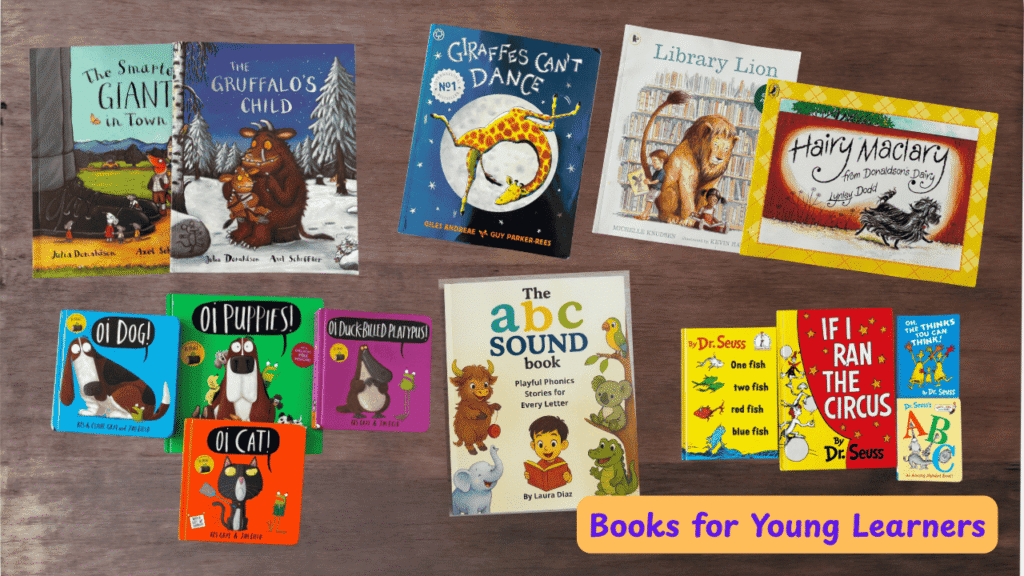
This article lists some excellent alphabet, rhyming, alliteration, and picture books that help toddlers develop pre-reading skills, such as The ABC Sound Book: Playful Phonics Stories for Every Letter.
2. Play Simple Sound Games (Not Letters Names)
Another big misunderstanding I hear everywhere is the idea that early reading preparation is all about memorizing letters nonstop.
But before children can connect letters to sounds, it’s important to have developed the ability to hear, notice, and play with sounds.
If you’ve heard about phonological and phonemic awareness before, it all begins here!
One of the easiest ways to support this from an early age is through play.
Some super simple no-prep game ideas are:
Sound-based “I Spy”
Instead of saying:
“I spy with my little eye something that starts with B.”
Say:
“I spy with my little eye something that starts with /b/.”
You can make this easier by limiting the choices to a few objects nearby. Some people like to use Montessori Miniature Object for this.
While these language objects are useful in many ways, you don’t need to invest in this material if you don’t want to.
For instance, I just use objects and toys I have around the house! Not as handy as the Montessori sets, but they can work just as well.

- COMPREHENSIVE SET: Includes 160 mini objects with 5 objects for each letter A-Z plus 6 digraphs (sh, ch, th, wh, ph, kn), perfect for phonics learning
- ORGANIZED STORAGE: 32-compartment case with wipeable labels featuring color-coded vowels and consonants for easy organization and access
- EDUCATIONAL VALUE: Perfect for speech therapy, phonics practice, letter-sound matching, and early literacy development in classroom or home settings
- VERSATILE USE: Ideal for sensory bins, literacy centers, Montessori learning activities, and hands-on phonics instruction for children ages 3 and up
- QUALITY CONTENTS: Features a diverse collection of miniature objects including trinkets, charms, toys, and cabochons for engaging learning experiences
This small change (playing “I spy” with sounds, instead of letter names) helps children focus on sounds, not letter names. This is what we want as this point.
Alliteration game
Choose a sound and brainstorm words that start with it.
For example, the /m/ sound:
- monkey
- mouse
- mischievous
- man
- money
Then make up a silly sentence using all the words you came up with!
“Mike the mischievous monkey took the man’s money.”
This repetition of beginning sounds is called alliteration, and it strongly supports early reading development.
Rhyme game
Another version of this game is playing to come up with words that rhyme.
Instead of words that begin with the same sound, you come up with words that rhyme.
Children love this game! Rhymes really hook them in, which leads right into the next tip…
Use Songs and Nursery Rhymes
We’ve been listening to songs and nursery rhymes for generations, and there’s a reason for that!
Any parent of a young child, or any early childhood educator will agree—songs and nursery rhymes are incredibly powerful tools for early learning.!
They naturally highlight:
- Rhythm
- Rhyme
- Repetition
These are three key ingredients for preparing a child to learn to read, to notice patterns in language, to help kids learn, and remember things.
In this day and age, I feel people are not singing to their children as much. We have outsourced the bulk of this task to apps and YouTube videos.
I’m not trying to be judgmental here—if you use screens, that’s okay. The key, really, is how you use them, and the amount of time your child spends on them.

If screens are part of your routine, try to use them intentionally to listen to educational content like alphabet songs, or nursery rhymes, and pick simple non-overstimulating content.
Some educational apps are great, but others rely heavily on overstimulation to keep kids hooked, and asking for me. Unfortunately, even some so-called educational apps!
If you are looking for apps, look for ones that are calm, age-appropriate, and ideally allow time limits.
A couple of solid examples are LingoKids (more than Learn English app, in my opinion), and Khan Academy Kids.
Since this is a big topic, so let’s leave it here in today’s article! However, if you are looking for good-quality educational apps, I recommend you take a look at this list!
Reading Readiness Is Built Over Time
These activities may seem small. But together, they create a strong foundation for reading.
You’re preparing the ground, so reading can grow more naturally later on.
You’re planting the seeds of the “tree of literacy.” And while you wait for the tree to grow, you focus on providing enough water, good soil, good sun exposure, etc.
Want More Support?
If you’re interested in learning how to develop pre-reading skills in a clear, playful, and evidence-based way, you may want to register your interest in my upcoming course on Reading Readiness Skills. More info here.
On top of that, you may want to explore more materials and resources in our library of free resources.
Prefer to Watch?

Hey there! I’m Laura – an author, YouTuber, blogger, and the creator of the “Learning Reading Hub” platform. I created this space to dive into the world of reading instruction and to shout from the rooftops about how vital it is to use the right methods for teaching reading. I’ve got a TEYL certification (Teaching English to Young Learners), plus a Journalism degree from the University of Navarra in Spain, along with a Master’s Degree in Communication.
I’ve always loved digging into research, jotting down my thoughts, connecting with people, and sharing what makes me tick. With a background in marketing, digital projects, and the education scene (especially language learning), I’m all about wearing different hats.
When my first kid needed to learn how to read, it opened my eyes to the challenges and complexities involved. This journey took me through a rollercoaster of self-teaching, eye-opening discoveries, and yeah, some letdowns too. There’s so much conflicting info out there, along with methods that just don’t cut it. And let’s face it, these issues are way too common.
Now, I’m all about channeling that passion (without sounding like a know-it-all!) and sharing my journey. My mission? Making it easier for those who are on the same path I once was.
My heart’s with my family and the amazing Learning Reading Hub project. I live with my husband and two little ones, raising them in a bi-lingual environment (English and Spanish).
